Imaging and Fetal Phenotyping SIG - VES Recap: Targeted Therapies for Achondroplasia and Skeletal Dysplasias
Stephanie Dukhovny, MD
Monique Haak, MD
Co-Chairs, Imaging and Fetal Phenotyping SIG
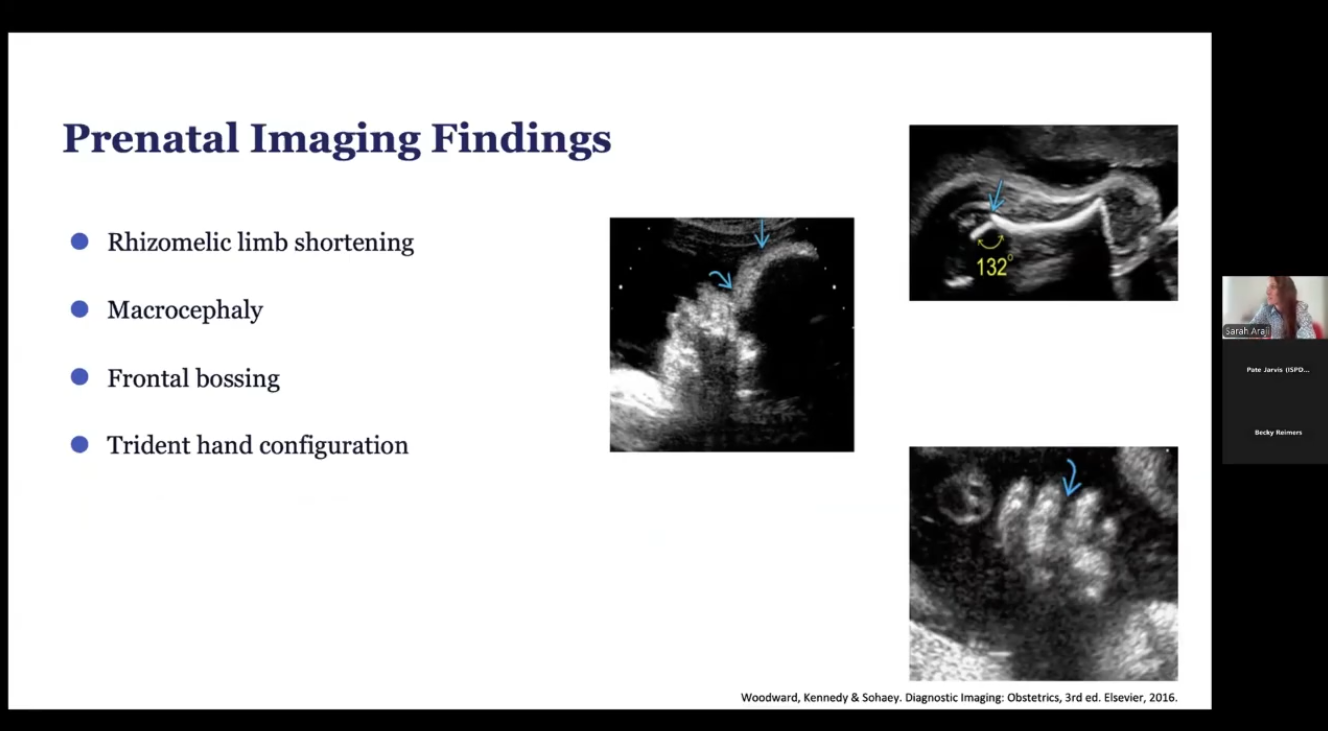
The Imaging and Fetal Phenotyping Special Interest Group is delighted to recap this season's premier Virtual Education Series (VES): Targeted Therapies for Achondroplasia and Skeletal Dysplasias. The session featured a presentation that underscores a powerful potential future application for precise fetal phenotyping: in-utero medical treatments for genetic conditions.
This VES featured Dr. Sarah Araji, who delivered a fascinating review of recent breakthroughs in Targeted Therapies for Achondroplasia and Skeletal Dysplasias during childhood. Though these interventions are not yet undergoing systematic prenatal trials, Dr. Araji’s insights demonstrate how these innovative treatments potentially transform the physical expression of these familiar conditions. Crucially, her talk opened the door to the future possibility of adapting them into in utero therapies. Because a precise prenatal molecular diagnosis could eventually unlock targeted treatments during pregnancy, mastering accurate fetal phenotyping is more vital than ever.
Dr. Teresa Sparks and Prof. Dame Lyn Chitty recently emphasized this precise connection between meticulous phenotyping, genetic testing, and fetal intervention. In their Prenatal Diagnosis commentary from June 2026, titled "The Importance of Clinical Acumen for Prenatal Diagnosis in an Increasingly Technological World," they write:
“Details of phenotypic features are essential to inform NGS result interpretation and optimize the filtering and prioritization of genetic variants under consideration, such as through incorporation of Human Phenotype Ontology terms. Clinicians have unique imaging and dysmorphology training required to identify these phenotypic features and integrate complex information from imaging and the history. For example, the addition of fetal or postnatal features not previously incorporated has the potential to uncover diagnoses initially missed with NGS, highlighting the importance of attention to detail and ongoing clinical phenotyping. Many situations require careful interpretation by a clinician, such as when a suspicious genetic variant is unexpectedly found to be inherited from a biological parent, or when a clinician identifies additional fetal abnormalities that alter the differential diagnosis. Further, clinical interpretation is essential when fetal interventions are under consideration, particularly when NGS results add clarity to or introduce uncertainty in the expected prognosis.”